
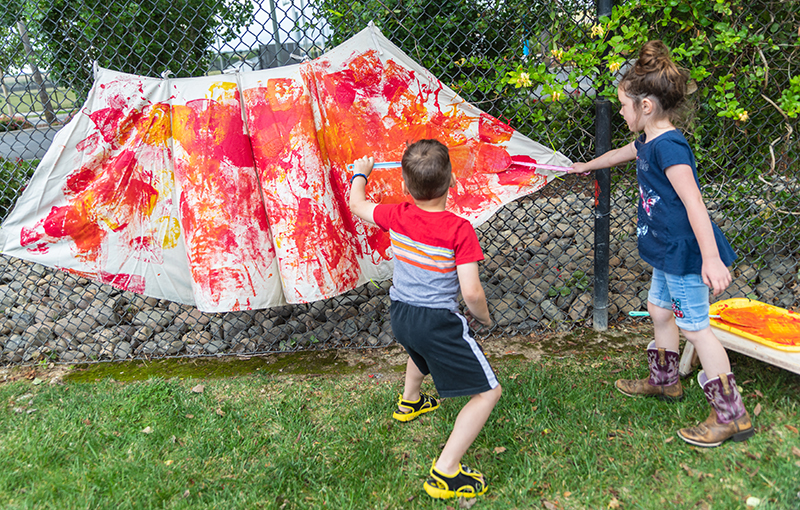
When the Central Valley plunges into the triple-digit days of summer, try these activities for children who are at home with their grownups during the COVID-19 pandemic. Danielle Waite, Executive Director of the Early Children Education Center, dipped into the archives of her activities lists for this collection of cool fun.
Water Play: With a large pot or dishpan, you can set up a water activity on the kitchen floor or outdoors that you can supervise. Make sure that you have a towel or two handy and it’s advisable, especially with the younger children, to make sure it’s not big enough to sit in. You don’t need to provide too much water for these, just enough to keep your child’s interest. For younger children, providing a few toys, small cups, old infant formula scoops or small measuring cups, and even rocks, will engage your child for quite a while. For older children, you can have them develop a theme with some small toys, provide some of the materials listed for younger children, as well as syringes or eye droppers (from old medicine dosing, cleaned), small glasses or vases, fresh flowers or leaves from outside, and a cut sponge (so it’s child hand-sized).
Pouring: This is a good activity for outside or inside a dishpan. Give your child a number of small containers (small glasses, coffee cups, vases, bowls, etc.). If you have any watercolors, you can color your water. I do not recommend food coloring, because it stains. You can also add a little oil or soap as well. Children love to pour from container to container. They see shape and volume. You can provide a small sponge for your child to mop up any spills in the dishpans. The squeezing of the sponge is great for strengthening their hand and fingers for writing and other fine motor activities. You can add eye droppers, turkey basters, spoons, small scoops, and syringes (clean medication syringes). You can also do this as a dry activity – instead of water use dirt, sand, or gravel with small scoops, spoons, and other utensils.
Ice Play: Take an old half-gallon milk container, wash well, then add water and freeze. This block of ice can keep your child entertained for a while. If you choose to add toys in the water before freezing, your child now needs to help get these toys out. You can provide salt, water, eye droppers, a small rock to smash or other tools for your child to try and free the captive toys. If you prefer to just offer a block of ice, there’s still plenty to explore. Loose ice from your ice maker or ice tray can be made to melt to your large block or add dimension to your child’s play. You can provide toys and other loose parts for your child to use with the ice and their imagination. Just remember to put the ice into a pot or dishpan for the melting water and have a towel available nearby.
Sink/Float: Fill a tall pot, dishpan, clear large-mouth jar (mayonnaise or spaghetti jars) with some water to experiment with sink/float aspects. Provide objects like small balls, pieces of sponges, toys, leaves, rocks, small sticks, flowers, utensils, etc. to have the child experiment. With older children, they can chart their predictions and/or findings in regards to each object and whether it sinks or floats. You can add some dish soap and see if adding soap changes any of the properties. Make sure you have a towel nearby for any spills.
Aluminum Foil Boats: Provide your child with a dishpan, plastic bin or large pot with some water and a piece of simple kitchen aluminum foil. Your child can then create boats to float on the water. They will be experimenting with water tension and surface area to create a vessel or fleet to float on the water.
Toy Pool Party – Provide a dishpan, large Tupperware container or large pot and let your child have a toy pool party! If you have some new sponges, they can serve as pool floats. Make sure you provide your child with a towel or two to dry off their pool party participants.
Tea Bag Sensory Play: Give your child a variety of tea bags, some water (lukewarm), child scissors, spoons, and a variety of cups/jars/containers. Your child can cut open tea bags, make tea and smell and taste the different flavors. They can experience how the water gets darker and the taste/smell more fragrant as they experiment and play. If you have tea ball strainers and a teapot (one you don’t prize), the play can get more involved with additional materials to explore.
Cut Sponges: This is an activity that can be done wet and dry. Take new simple sponges and cut them into pieces (rectangular – think Jenga blocks). Cut them length-wise and width-wise. They can then be used for a variety of building activities when dried and then when you add water – they behave so differently! These can be used over and over again, just allow them to dry out. Extensions – use colored water (a little food coloring goes a long way!) or dish soap.
Bubble Making: Using a pot or dishpan with water and dish soap, have your child use the strawberry basket as a tool to make bubbles. You can also give your child a manual hand mixer (non-electric) and a whisk for them to make mountains of bubble foam. Don’t forget a sponge and towel to mop up messes if you do this indoors.
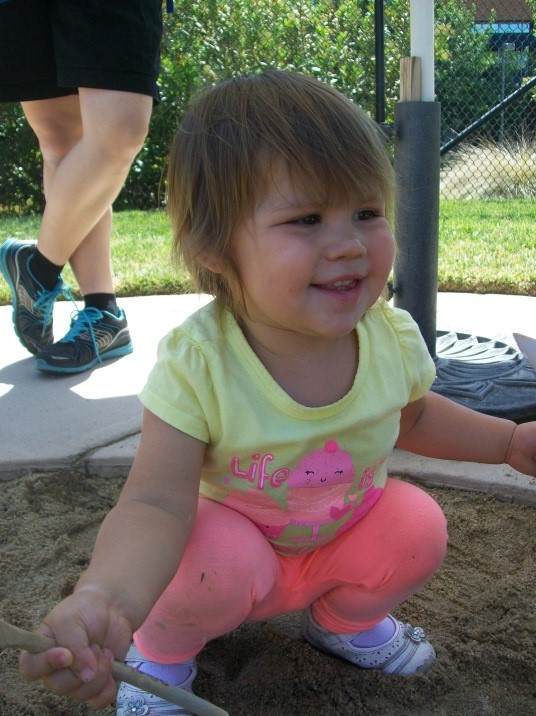 Spray Bottle Target Practice: This is a great outdoor activity. Set up some paper towel rolls on end and place either a light plastic ball or crumpled paper ball on top. Provide a simple hand spray bottle filled with water for target practice. Encourage them to spray the ball off the paper towel roll and then reset the activity. If they get bored with that, have them spray plants outside, the fence, the ground, the grass and even give their toys a good spray washing.
Flower Sensory Soup: Provide some flowers in a small bowl or basket and water in a large stockpot and provide your child with a variety of kitchen utensils, such as slotted wooden spoons, pasta spoons, sieve spoons or spatulas to have your child “make soup” with. This can be done with corks, ping-pong balls or other things that float as well, but it looks amazing with flowers.
Toy Car Wash: Provide your child with a new toothbrush, a small bowl of kitchen dish soap, a container of water and a towel. Your child can scrub and make bubbles as they wash cars or other small toys that need a little TLC.
Bug Ice Cubes: This activity will be noisy and messy! We suggest you set this up outside for your child to enjoy. Use small toy bugs, spiders or other toys to put into the ice tray before freezing. If your child still puts everything in the mouth, use a raisin or dried cranberry instead of toys. Once these toys or fruit pieces are frozen solid, remove them from the ice tray and set up a smashing station. Giving your child a small hammer (a real one) or child hand-sized rock and let them smash the ice to free the toy or fruit stuck inside. This is a great activity to promote hand-eye coordination and smashing things can be quite fun!
Water Painting: You will need a container for water, an old paintbrush and surfaces to “paint”. Have your child paint on the cement, rocks, wooden fence slats, and other surfaces. The water will change the color of what your child painted and then will begin to evaporate. Your child will notice the changes and enjoy watching the changes in how things look and how it disappears.
Cotton Ball Painting: This activity needs colored construction paper, cotton balls and water. Have your child use the wet cotton balls to paint on the construction paper. This is a variation of water painting on cement or fencing that we did previously. Encourage your child to squeeze out their cotton ball before painting. This strengthens their hand muscles and provides for less mess.
Goop: Combine cornstarch and water in a brownie type pan or dishpan. Add a quantity of water to a consistency of where all the cornstarch is wet. This mixture is both a liquid and a solid. It is recommended that you do this outside or in the kitchen. It can be quite messy, but it is fun. Sensory science fun!
Here are some indoor activities for hot days:
Frozen Peas or Corn: These are great materials to scoop and pour with. Give your child spoons, small measuring cups, small scoops (old infant formula scoops or clean medication measuring scoops), and bowls to move the peas and/or corn in. The base should be a tray, dishpan or lasagna pan to keep everything together.
Make Your Own Light Table: Take a clear or transparent tub or container. Line the sides with aluminum foil, leaving the bottom uncovered. Place either battery operated or plug in string lights under the inverted tub. You’ve created a light table! This can be a base for any translucent plastics, arranging loose parts (toothpicks, flowers, leaves, corks, bottle caps, Q-tips, feathers, etc.) for ephemeral art designs, tracing (for older children) and a great attraction in the dark corner of a room.
Umbrella Day: Open all your umbrellas inside to create a low tent-like area for your child to spend time in. Add some pillows and books. You can also hang things inside the umbrella – cut out heart, little airplanes or twinkle lights – to make it more enchanting.
Table Tent: Convert any tall table (dining room or kitchen table) into a cozy tent and hiding spot. Place a large sheet or blanket over the table and add pillows, toys or books to make it an entertaining getaway. If you have your Light Table (from Volume 1), you can add it to this area. Remember that the sheet/blanket does not need to go to the ground. As long as your child can’t directly see you, you can still check in with their play by leaving the blanket 6 inches or so from the ground, they will still feel that they are in a secret hiding area.
Flashlights: Set this up somewhere darker in your house and watch the fun! For infants you can hang them from above so your baby can explore the light on the floor. Walking infants and older will want to hold it, turn it on and off while exploring the beam of light. If you have the colored box from the previous activity suggestions, they can hide inside to even make it a little darker.
Sticky Webs: Take some tape and crisscross it back and forth in an open doorway or between two chairs, making a web that is child height. Then provide items for your child to stick on the tape (and peel them off again). Light items such as paper scraps, feathers, Q-tips, small toys, etc. work best.
Homemade Playdough: This activity does take a little parent prep to make the playdough, but it will last you weeks. It is edible and if it gets into the carpet, just wait for it to dry, scrape and then wash with soap and water. The attached recipe is a large classroom batch, you can make half for your child. If you do not have corn oil, other vegetable oils will work, but they dry faster. When not in use, store in an airtight container or plastic zip-loc bag. Making it without colors is fine too. Dough colored playdough. There are other recipes online, if you are missing ingredients, that you can try. Recipes that require Kool Aid punch powder WILL stain.
Playdough Recipe
- 3.5 cups flour
- 2 cups salt
- 4 cups water
- 8 tsp cream of tartar
- 5 tbsp corn oil
- Food coloring or watercolor
Mix the dry ingredients first, then add the wet ingredients. Cook over low heat, stirring constantly. Remove from heat the dough is sticky to the touch.


